If you are planning building work, landscaping or a clearance in Surrey or West Sussex, choosing the right waste removal method is one of the first practical decisions to make. The comparison of grab hire vs skip hire comes up frequently because both services remove waste efficiently, but they suit different types of projects.
Whether you are a contractor managing groundwork, a homeowner renovating or clearing a garden, understanding the difference between grab hire and skip hire will help you avoid delays, unnecessary costs and access issues.
What Is Grab Hire and How Does It Work?
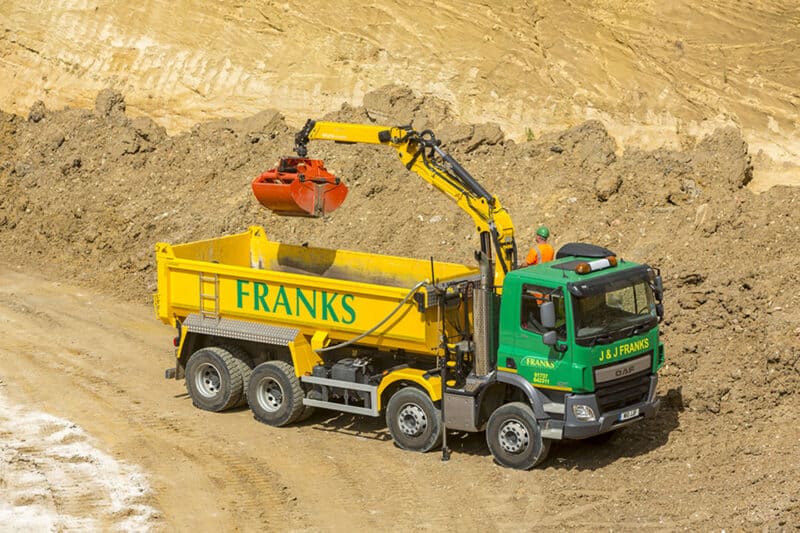
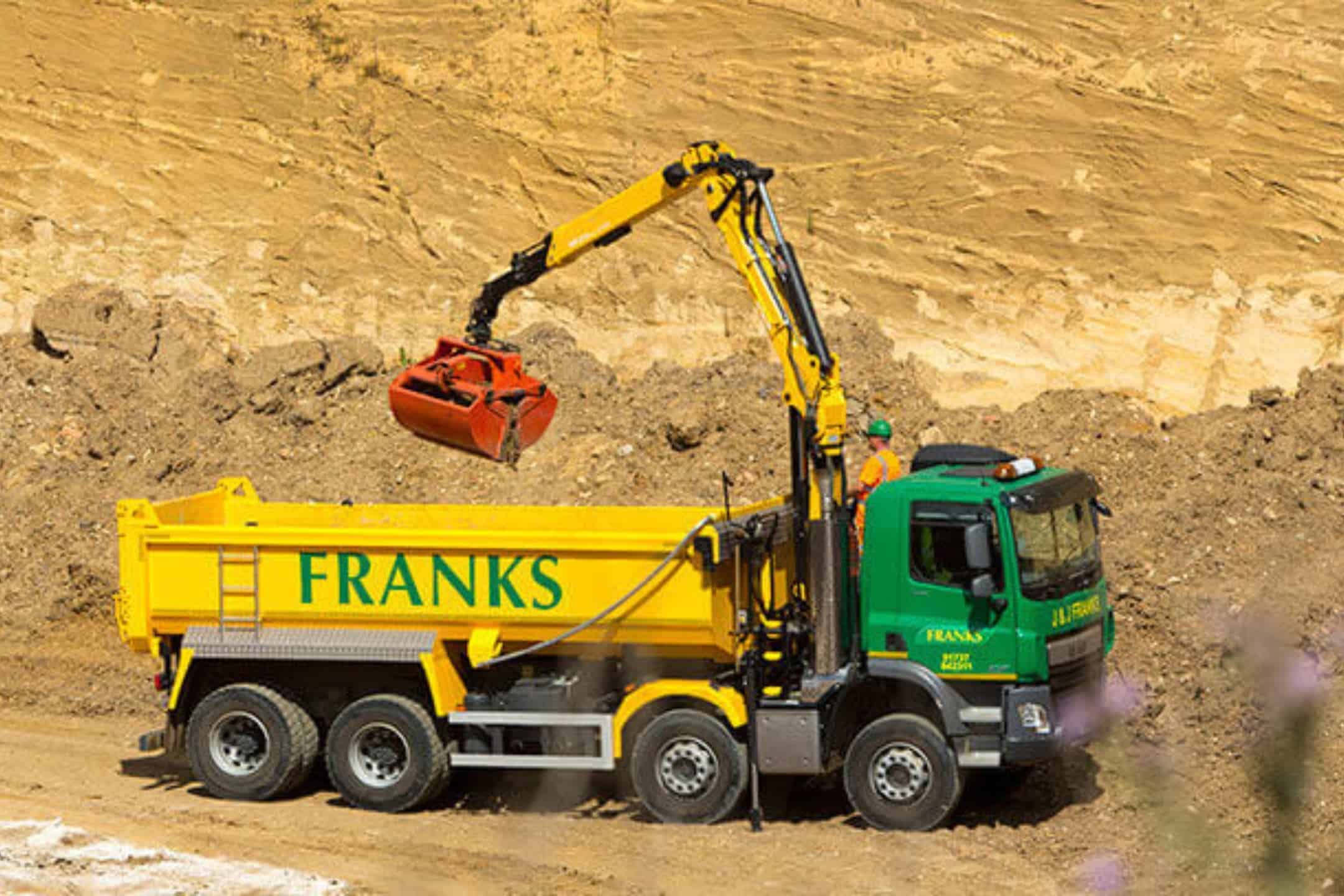
Grab hire uses a specialist lorry fitted with a hydraulic arm and bucket to collect waste directly from your site. Instead of placing a container and returning later, the vehicle arrives, loads the material mechanically and removes it in a single visit.
A grab lorry can carry up to 16 tonnes per visit, depending on the material. This makes it particularly effective for bulk loads of soil, hardcore, concrete and other inert waste.
The hydraulic arm can reach over fences, walls and outbuildings, allowing access to back gardens or restricted areas where placing a skip may not be practical.
Grab hire is commonly used for:
- Excavation spoil
- Landscaping waste
- Demolition rubble
- Large garden clearances
- Groundwork and infrastructure projects
Across Surrey, including areas such as grab hire in Morden, grab hire in Wallington and grab hire in Surbiton, it is often chosen for speed and volume capacity.
What Is Skip Hire and How Does It Work?
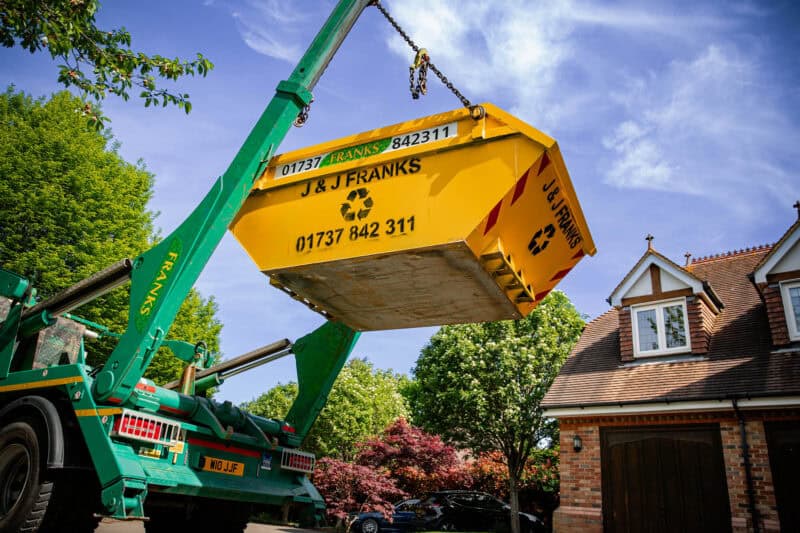
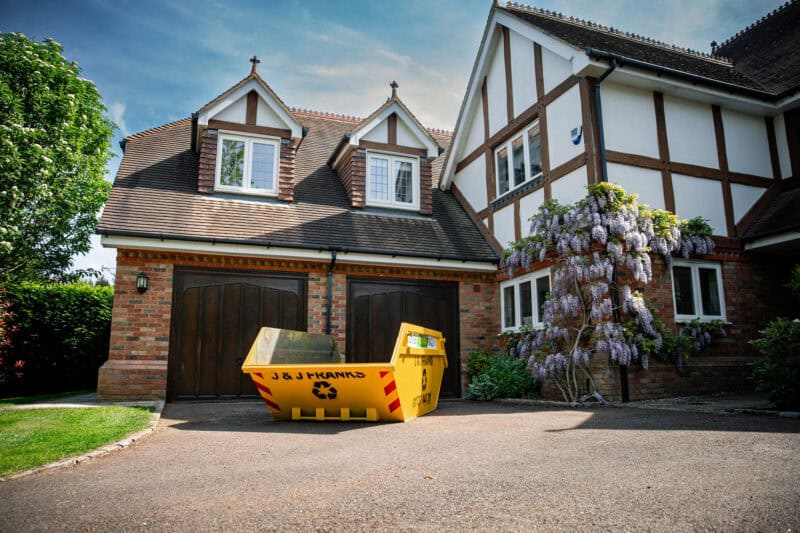
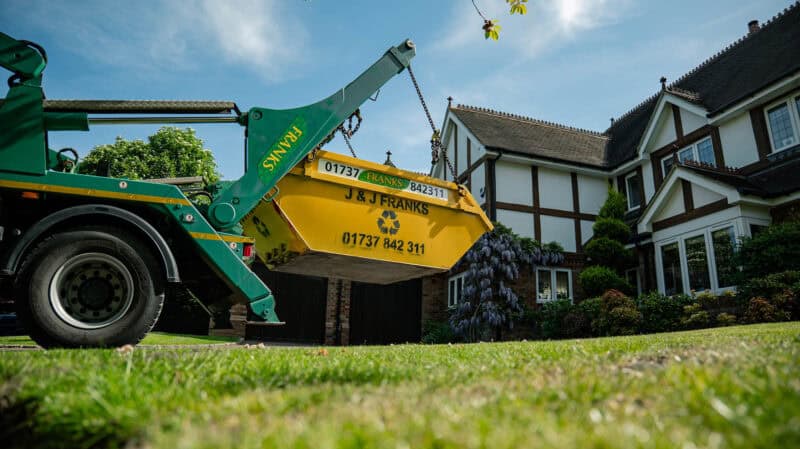
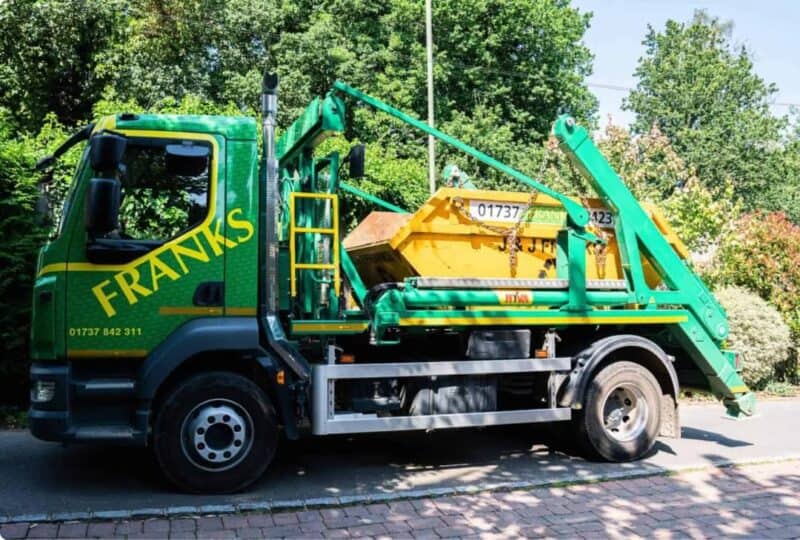
Skip hire involves delivering a container to your property or site, which you then fill at your own pace. Once full or at the end of the agreed hire period, the skip is collected and transported to an authorised facility for sorting and processing.
Skips are available in a range of sizes, making them suitable for:
- Home renovations
- Loft or garage clearances
- Kitchen and bathroom refits
- Small building projects
- Mixed waste loads
One of the main advantages of skip hire is flexibility. You can load the skip gradually over several days, which is useful for projects that develop in stages.
If the skip is placed on private land such as a driveway, no permit is usually required. However, if it needs to sit on the public highway, you must check is a skip permit needed before delivery.
Grab Hire vs Skip Hire: Key Differences Explained
When comparing grab hire vs skip hire, consider the following practical differences.
Speed of Removal
Grab hire removes waste in one visit. This is ideal for projects that need immediate clearance.
Skip hire allows ongoing loading over a longer period, which suits staged renovation or domestic projects.
Volume Capacity
A grab lorry can remove up to 16 tonnes in a single visit. This is typically more than a single skip can hold.
Skips have fixed capacity based on size. Larger volumes may require additional collections or exchanges.
Access Requirements
Grab lorries need suitable road access and space to operate the hydraulic arm. The arm’s reach over fences and walls can overcome certain site restrictions.
Skips require physical space for placement. If space is limited or unavailable off-road, highway permits must be arranged.
Waste Type
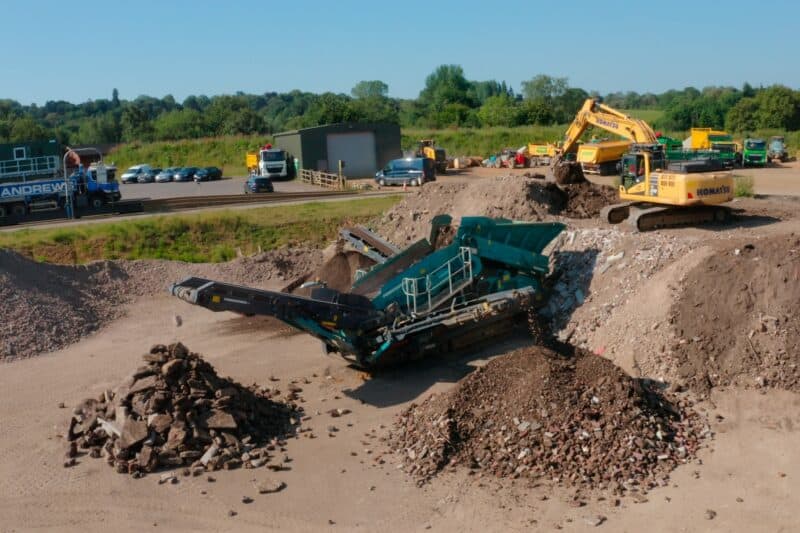
Grab hire is particularly effective for heavy inert materials such as soil and rubble.
Skip hire is better suited to mixed waste including timber, packaging, plasterboard and household items.
Permits
In most circumstances, no permit is required for grab hire because the vehicle does not remain on the road. For more information, see is a permit needed for grab hire.
Road-placed skips require local authority approval.
When to Use Grab Hire in Surrey
Understanding when to use grab hire in Surrey can simplify planning and reduce delays.
Grab hire is often the better option when:
- You have large volumes of soil or hardcore
- Waste is already piled and accessible
- The project requires a fast turnaround
- There is limited space for a skip
- You are undertaking groundwork or landscaping
For bulk inert waste, the grab lorry vs skip comparison often favours grab hire due to its loading speed and capacity.
When to Choose Skip Hire
Skip hire is usually the right choice when:
- Waste includes mixed materials
- The project runs over several days
- You want to load gradually
- Volumes are moderate rather than bulk
- Domestic renovation or clearance is involved
Many homeowners in Surrey choose skip hire for kitchen refits, bathroom upgrades and general property clear-outs.
Grab Hire vs Skip Hire in Surrey: Can You Use Both?
On larger projects, combining both services can be an efficient solution.
For example:
- Use grab hire for soil removal after excavation
- Use skip hire for timber, fittings and mixed renovation waste
Separating waste streams ensures materials are handled appropriately and collected in the most practical way.
This approach is common across Surrey and West Sussex on projects involving both groundwork and property refurbishment.
Which Is Cheaper: Grab Hire or Skip Hire?
The question of which is cheaper grab hire or skip hire depends on:
- Waste volume
- Material type
- Project duration
- Access constraints
Grab hire can be cost-effective for large single-load removals. Skip hire may be more economical for smaller, mixed loads spread over time.
Rather than focusing only on price, consider efficiency and suitability. Choosing the wrong option may result in additional collections or extended hire periods.
Making the Right Choice for Your Surrey Project
When deciding between skip hire or grab hire, ask yourself:
- What type of waste am I removing?
- How much material is there?
- Do I need immediate removal?
- Is there space for a skip?
- Will I need a permit?
J&J Franks provides both services across Surrey and West Sussex, supporting domestic customers, contractors and developers with practical waste removal solutions.
If you are unsure which option suits your site, contact us to discuss your project and receive tailored advice.