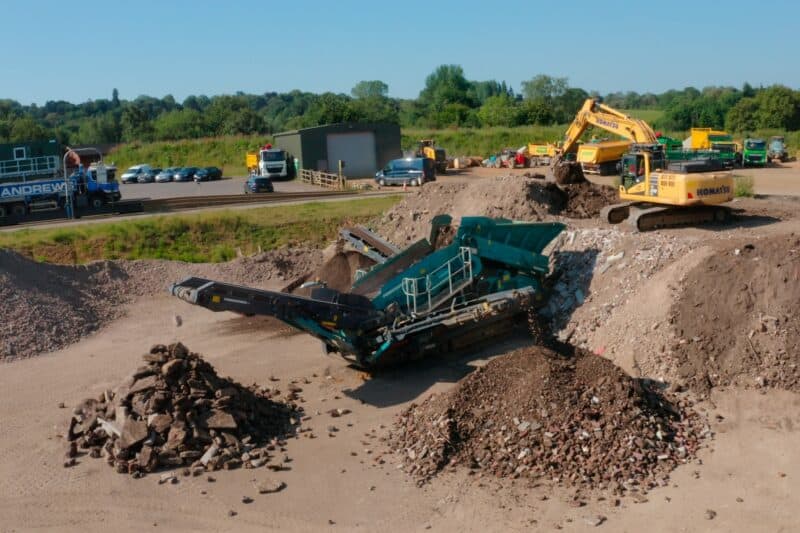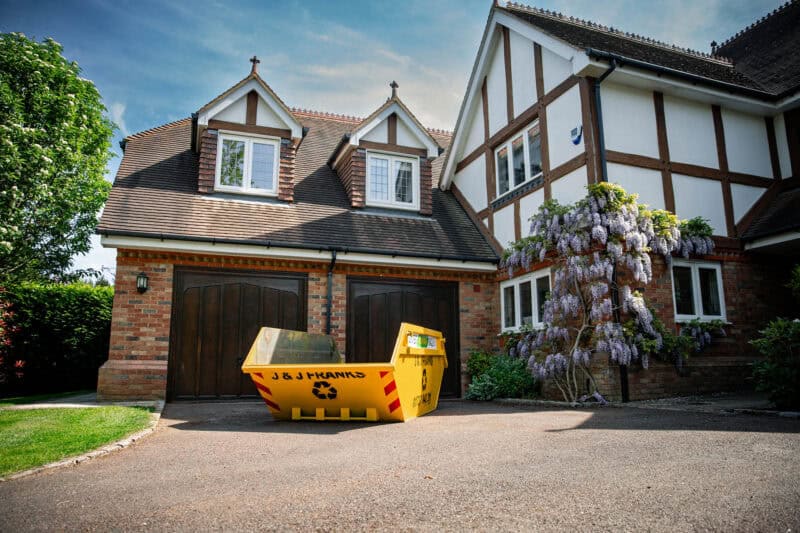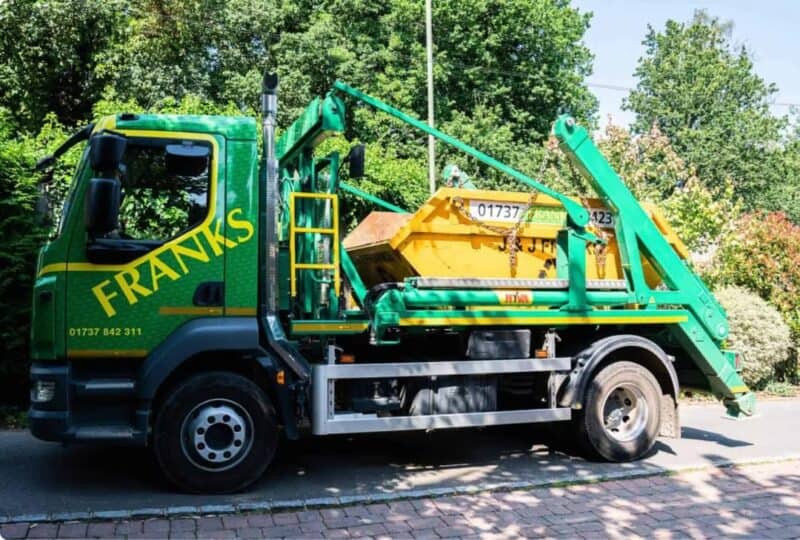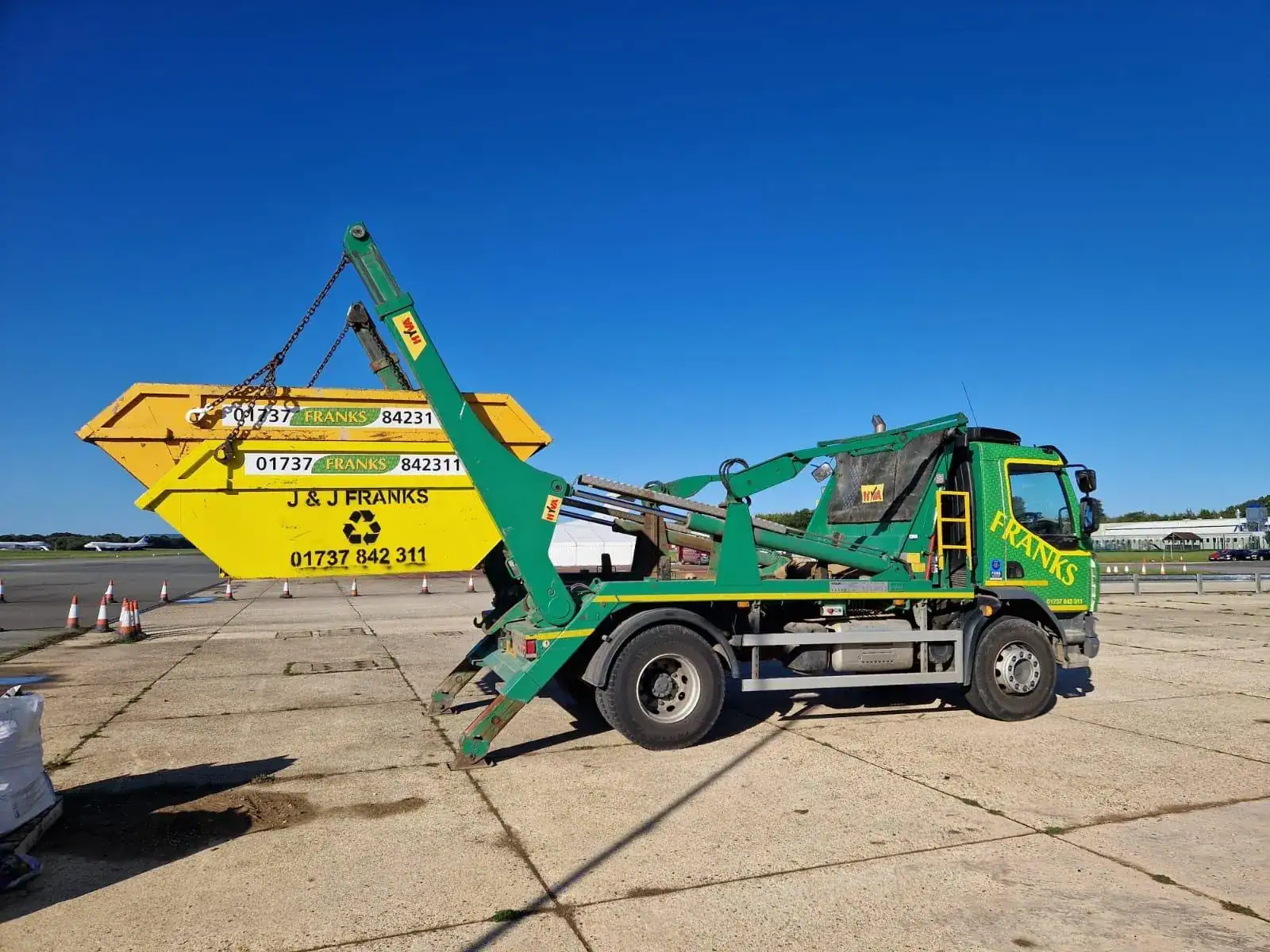
Commercial skip hire helps site managers, contractors and developers keep live projects clear and ready for the next stage of work. Waste is produced throughout a commercial build, from demolition and strip out to fit out and final clearance. When it is left around the site, it takes up working space, creates hazards and can lead to complaints from clients, neighbouring businesses or the public.
J&J Franks provides commercial skip hire across Surrey, West Sussex and South London. Our own fleet and licensed waste transfer station support commercial projects with practical delivery, exchange and collection arrangements. Skip hire for commercial construction gives trades a defined point for waste, helping the site remain workable as the programme develops.
Why Site Cleanliness Matters on Commercial Builds
Loose rubble, packaging, timber and offcuts create avoidable obstructions across a commercial site. They restrict walkways, affect loading areas and make it harder for operatives, deliveries and plant to move through the project safely. Waste left underfoot also creates a direct slip and trip risk.
Clear working areas make day to day site management more straightforward. Deliveries can be directed to the right location, plant has more room to move and trades are less likely to disrupt one another in shared spaces. A well organised site is also easier to prepare for client walk rounds and inspections.
The Construction (Design and Management) Regulations 2015 require construction sites to be kept in good order and work areas to be kept reasonably clean, so far as reasonably practicable. Setting responsibilities for storage, segregation and collections before work begins gives project teams a stronger basis for site waste management. A clear waste management plan helps set out these arrangements before work begins.
Benefit 1: Waste Is Contained From Day One
Having a skip in place before strip out begins gives every trade a defined disposal point. This stops temporary piles forming beside the work face, around loading bays or along shared access routes, so waste is contained before it becomes a larger clearance task later in the programme.
Construction skip hire supports phased work as the material produced changes over the course of a project. Demolition and strip out generate dense waste that needs regular removal, while fit out stages tend to create lighter waste from deliveries and installation work. Waste acceptance is subject to assessment and materials requiring separate handling should be identified before collection.
Benefit 2: Safer Walkways and Working Areas
A designated skip helps keep suitable waste away from routes used by operatives, visitors and delivery drivers. It gives trades a practical disposal point for offcuts and packaging, helping to prevent shared areas becoming cluttered as work progresses.
Placement should form part of the wider site layout. The container needs to be close enough for regular use without obstructing pedestrian access or site operations, with room for safe delivery and collection. This supports clearer working areas, reduces avoidable trip risks and makes waste disposal part of the daily routine.
Benefit 3: Faster Programme, Fewer Delays
Waste left in the wrong place has to be moved twice. Operatives may need to clear an area before the next trade starts or a delivery arrives, interrupting the programme and creating extra pressure later in the job. Scheduled exchanges keep containers available during high output stages, with collection frequency matched to the waste produced.
On larger projects, multiple skips support clearer construction site waste management by separating suitable materials and keeping the work face clear. Where builders skips need frequent exchanges because waste output remains high, RoRo containers for commercial projects offer a useful comparison between larger capacity and the space required on site.
Benefit 4: Compliance and Documentation Made Simple
Commercial waste should be identified clearly before collection so the agreed service and paperwork reflect the material being removed. Accurate descriptions help the receiving facility understand the load and reduce the risk of unsuitable material entering the wrong waste stream. A waste transfer note records each movement from site, giving the project team a useful record when different materials are removed across demolition, strip out and fit out stages.
The carrier also forms part of that record. Using a licensed waste carrier gives contractors and developers a clearer view of who is collecting the waste and what happens after the skip leaves site. This supports a more organised approach to collections, exchanges and project documentation.
Benefit 5: Higher Recycling Rates and Lower Disposal Costs
Separating suitable materials at source gives contractors clearer control over site waste. Keeping streams apart avoids unnecessary mixing and makes loading simpler for each trade.
Segregation supports recycling and recovery where suitable, while giving contractors clearer information for project reporting. J&J Franks processes collected waste through its licensed waste transfer station, where suitable materials are sorted for recovery and less material is sent to landfill.
Lower disposal costs are not automatic, but organised loading helps avoid unnecessary handling caused by unsuitable mixed loads. Regular trade waste recycling arrangements support businesses managing commercial waste alongside project work.
Choosing the Right Skip for a Commercial Site
The right container depends on the waste type, expected volume, site access, available space and collection schedule. Builders skip hire for commercial projects is often suited to fit out work, refurbishments and controlled project phases. Six yard and 8 yard builders skips provide a practical disposal point for general construction waste, while 12 yard skips suit bulky light waste.
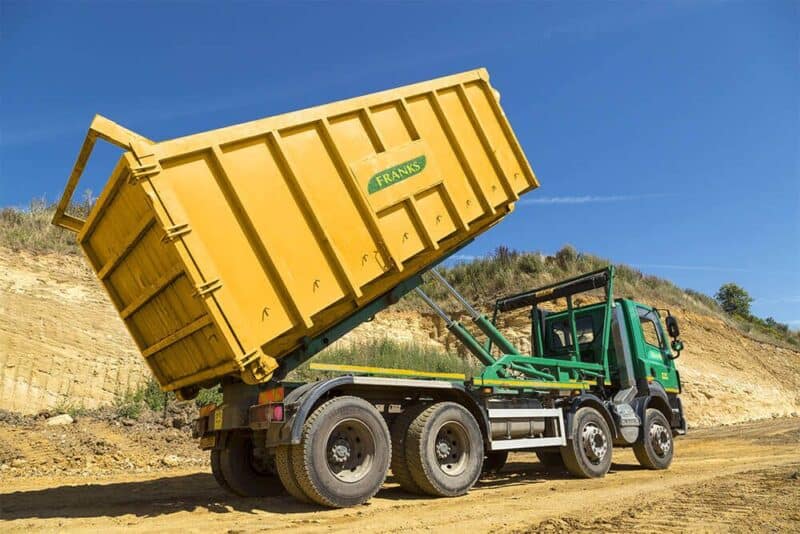
For demolition and larger waste volumes, 20 yard and 35 yard RoRo containers offer higher capacity where the site has sufficient room and suitable vehicle access. RoRo skip hire is one option within a wider commercial waste plan, rather than the right choice for every site.
Loose spoil, hardcore and excavation material are often more practical to remove directly from the work area than load manually into a skip. Where site access, loading arrangements and material type are suitable, grab hire provides a direct collection option.
Sustained volumes of excavation spoil often need a dedicated arrangement. Muck away services are suited to inert and non-hazardous excavation waste, subject to waste assessment and site conditions.
Why Choose J&J Franks for Commercial Skip Hire?
J&J Franks has more than 80 years of experience supporting site managers, contractors and developers across Surrey, West Sussex and South London. Our own fleet and licensed waste transfer station provide practical support from delivery and collection through to the handling of suitable materials.
Commercial skip hire for Surrey projects needs to reflect live site conditions, including restricted access, changing waste volumes and phased work. J&J Franks can also support related requirements through RoRo skips, grab hire, muck away and trade waste recycling, helping site teams keep waste arrangements aligned with the work underway.
Contact J&J Franks to plan skip hire around your site layout, programme and waste volumes.