Skip hire for hotel developments needs to work around sites that are still welcoming guests, receiving deliveries and managing daily operations. During a refurbishment, waste must be removed without disturbing guests, blocking the car park or affecting the arrival experience.
New build hotels create a different challenge. Construction waste can build up quickly while several trades work to a tight programme. J&J Franks supports hotel refurbishment and development projects across Surrey, West Sussex and the Gatwick corridor with practical waste arrangements shaped around access, project phases and hotel operations.
The wider benefits of skip hire for commercial construction are particularly relevant where hotel refurbishment work needs to continue around guests, staff and daily site activity.
What Makes Hotel Projects Different?
Hotel developments bring construction work into an environment that must continue serving guests. Refurbishment is often carried out in phases, with work taking place in occupied buildings where bedrooms, public areas and hotel facilities remain in use. Waste storage and collection arrangements need to support the project without affecting arrivals, access through the building or the appearance of front of house areas.
The hotel also needs to maintain its usual day to day servicing. Delivery and collection access is often restricted to early mornings, quieter periods or service yard entrances. Skip exchanges therefore need to work around hotel operations as well as the construction programme, while leaving space for housekeeping, maintenance and routine deliveries.
Hotel refurbishment waste management involves a varied mix of materials, from mattresses, carpets and furniture to bathroom suites, fit-out packaging and general building waste. Planning for these different waste streams from the outset helps keep each stage of the project organised.
Planning Skip Hire Around a Trading Hotel
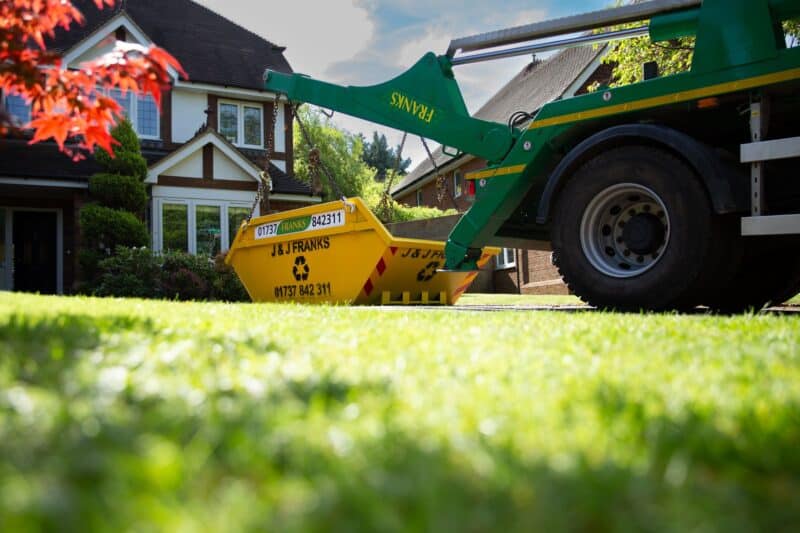
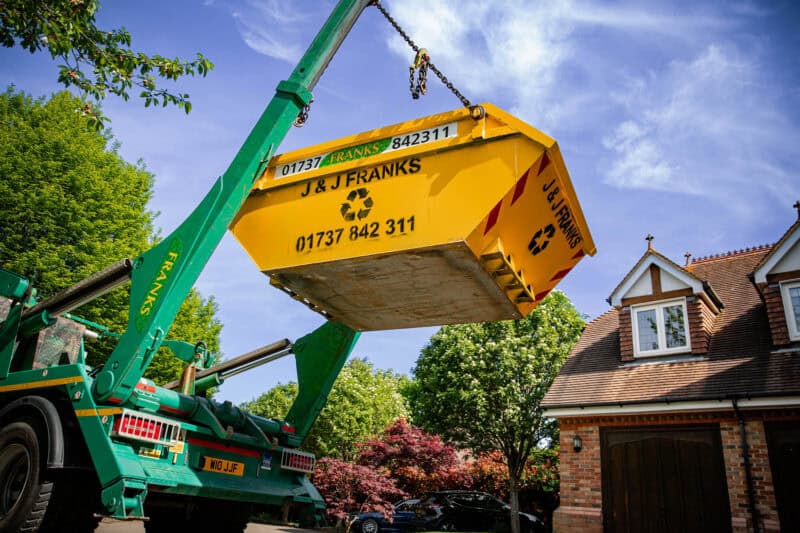
Skip hire can be arranged at a trading hotel, provided the skip location, vehicle access and exchange arrangements suit the site. A clear waste plan should be agreed before strip-out begins, setting out how materials will move from working areas to the collection point and when collections will take place.
Service yards, loading bays and designated contractor areas are generally more suitable than guest parking or front of house routes. This helps keep entrances, drop off areas and car parks clear for guests, staff and deliveries. Enclosed or lidded skips also help contain lightweight waste and maintain a more presentable working area.
Collections should be arranged outside busy check in, check out and event arrival periods. Where space is limited, regular exchanges are often more practical than keeping a large container close to the building. If a skip must be placed on a public road, a permit is needed. J&J Franks can advise on the process, subject to local authority requirements, with further guidance available in the skip permit guide.
Choosing the Right Skips for Each Phase
Choosing the right skip size depends on the waste type, volume, site access and stage of the project. Hotel renovation skip hire often involves different arrangements as work moves from strip-out to structural alterations and final fit-out.
Strip-out phase
Strip-out work creates bulky waste from carpets, curtains, mattresses, furniture, bathroom fittings and redundant fixtures. A 12 yard skip or RoRo skip is often used for larger programmes involving soft furnishings and fittings. The suitable option depends on the expected volume, available working area and vehicle access.
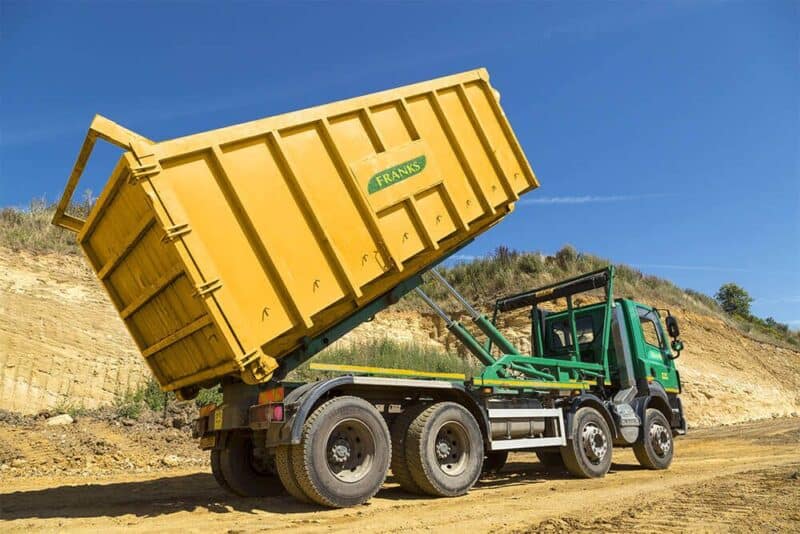
RoRo skip hire is suitable for hotel developments producing high volumes of bulky waste where the site has adequate space for the container and collection vehicle. J&J Franks provides 20 yard and 35 yard RoRo skip hire options for larger commercial and construction projects.
Structural and bathroom works
Bathroom replacements and structural alterations often produce heavier inert waste such as tiles, ceramics, bricks, rubble and old fittings. An 8 yard builder’s skip is often used where access and waste assessment support that arrangement.
Fit-out and finishing work
Fit-out work commonly produces packaging, timber offcuts, plasterboard and other installation waste. A 6 yard or 8 yard skip often suits this phase. Separate skips for timber and plasterboard support better segregation and help manage hotel fit-out waste removal across phased works.
Our main skip hire service covers commercial renovation and construction projects across Surrey, West Sussex and South London.
Dealing With Mattresses, Furniture and Soft Furnishings
Volume is often the main issue during a hotel refit. Mattresses, carpets, furniture and curtains can fill a skip quickly, particularly when several floors are cleared within a short period.
Mattresses attract an additional charge and should be counted in advance. Confirming the quantity before collection helps the project team plan suitable capacity for the strip-out programme.
Furniture and soft furnishings should also be identified before removal. Their condition, material type and the contents of the load affect the available disposal or recovery route. Waste acceptance is subject to assessment, especially where loads contain mixed materials.
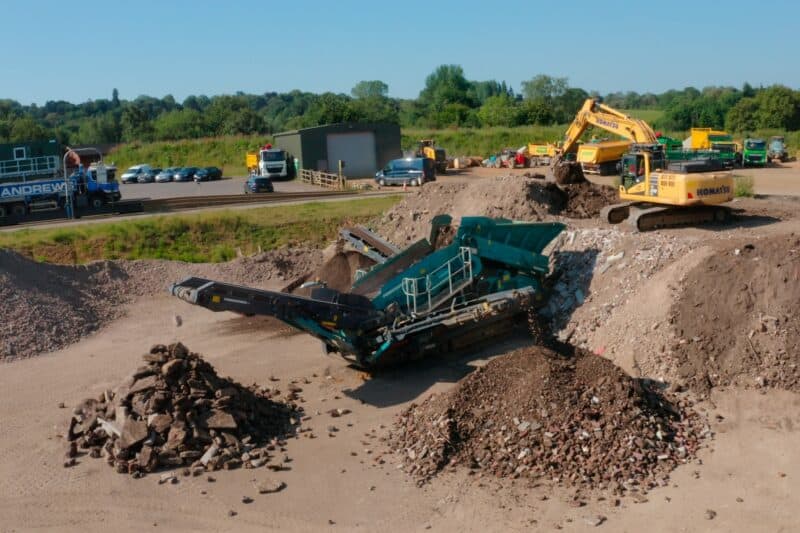
Where suitable, timber, cardboard, metals, plastics, tiles, paper and some fabric waste can be sorted for recycling or recovery through the waste transfer station. This supports responsible hotel construction waste disposal without assuming every material follows the same route.
For recurring segregated waste streams, trade waste recycling provides commercial collection, sorting and reporting support.
Hazardous Materials in Older Hotel Buildings
Hotel refurbishments can produce hazardous waste, particularly in older buildings. Buildings constructed before 2000 could contain asbestos containing materials, which require specialist assessment and compliant handling before work continues.
Other materials needing separate consideration include fluorescent tubes, electrical equipment, refrigerants from minibars and air conditioning systems, paints, solvents and chemicals. None of these materials should be placed in a general skip.
Hazardous waste acceptance is subject to assessment. The appropriate route depends on the material, its condition and the documentation required. Specialist handling and compliant disposal may be necessary where older building materials or equipment are removed during a refit.
Our hazardous waste removal service provides an appropriate route for materials requiring specialist attention. Identifying potentially hazardous waste before strip-out begins helps prevent unsuitable materials entering the general waste stream.
Compliance and Reporting for Hotel Groups
Hotel groups, developers and main contractors often need records showing how project waste has been managed. Waste transfer notes provide a record of waste movement and support traceability throughout a refurbishment or construction programme.
Responsibility for waste should be agreed before work begins. The main contractor often manages skip placement, collection schedules and on-site segregation, while hotel management sets rules for guest access, service routes and working hours. The licensed carrier status of the provider handling each waste stream should also be checked.
For internal ESG reporting, waste transfer documentation, recycling rates where available and recovery information can help build a clearer picture of project waste streams. Keeping accurate waste transfer notes is an important part of this process, providing a record of how waste has moved from the hotel project.
Why Choose J&J Franks for Hotel Development Waste
J&J Franks provides waste management for hospitality projects across Surrey, West Sussex, South London and the Gatwick corridor. This local coverage is relevant to Surrey hotel stock and developments around Gatwick, where refurbishment and construction programmes often need to operate around live guest areas.
With more than 80 years of experience, J&J Franks supports trading hotel refurbishments, strip-out programmes and new build developments with skip hire, RoRo skip hire, recycling and waste transfer services. The business operates its own fleet and licensed waste transfer station, supporting a coordinated approach to collections, documentation, sorting and material recovery.
For commercial skip hire for hotels, contact J&J Franks to discuss waste types, expected volumes, access conditions and the operational requirements of the site.