On modern construction sites, recycled materials are no longer secondary considerations but a routine part of waste management strategy. Construction and demolition projects generate significant volumes of material, much of which can be recovered, processed and returned to use rather than sent to landfill.
For contractors and developers, understanding which materials can be recycled and how they are handled supports better planning, improved site efficiency and responsible waste management.
Why Recycling Matters in Construction
Construction sites produce a wide range of waste streams, from inert materials such as concrete and soil to metals, timber and packaging. Managing these materials correctly forms part of a contractor’s waste duty of care.
Construction waste recycling reduces reliance on landfill and allows suitable materials to be recovered for reuse in groundwork, infrastructure and new developments. A waste transfer station provides a controlled environment where mixed loads can be sorted and directed into appropriate recycling streams.
Our guide on the role of recycling in construction waste management explains how structured recovery supports both compliance and efficiency.
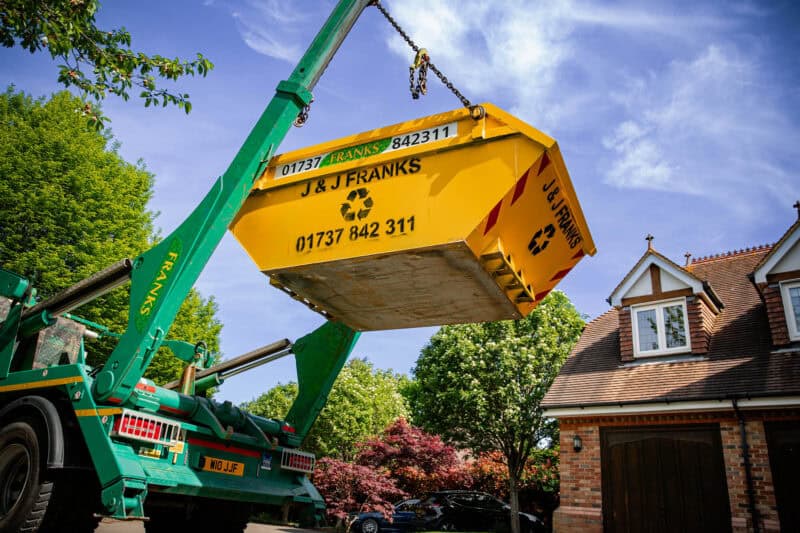
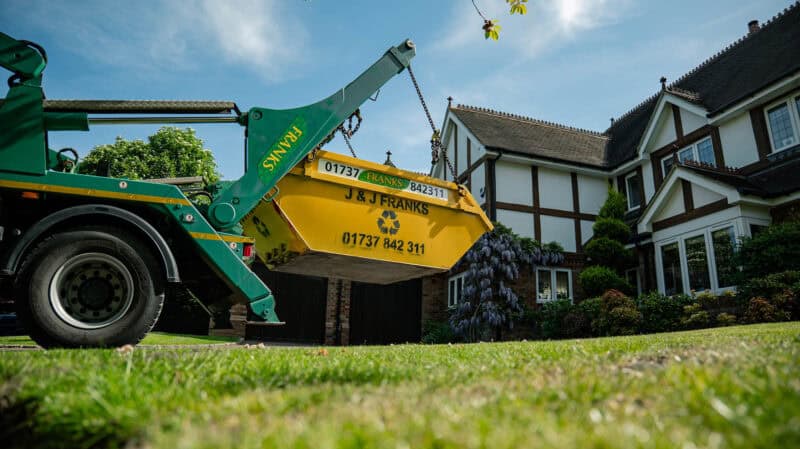
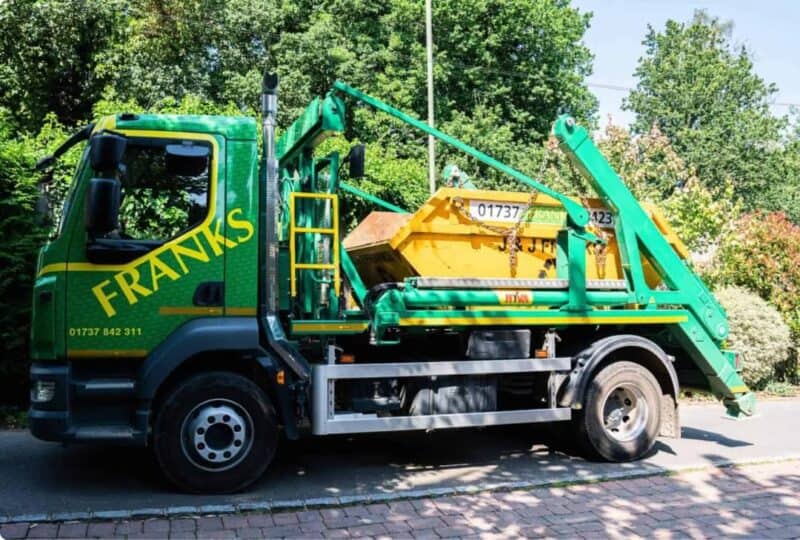
With over 80 years of experience, J&J Franks supports responsible waste management across Surrey, West Sussex and South London, ensuring materials are handled by licensed operators and processed at authorised facilities.
Top 10 Most Recycled Materials in Construction
Below are ten of the most commonly recovered and recycled materials found on construction and demolition sites.
1. Concrete
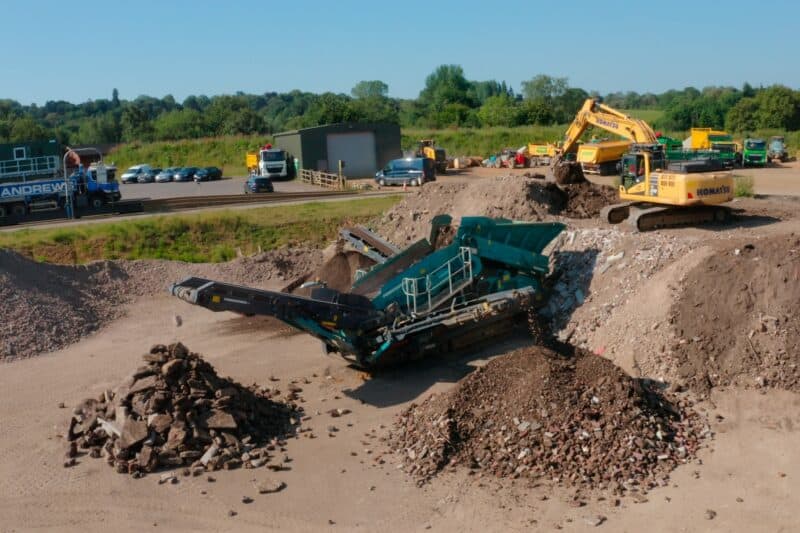
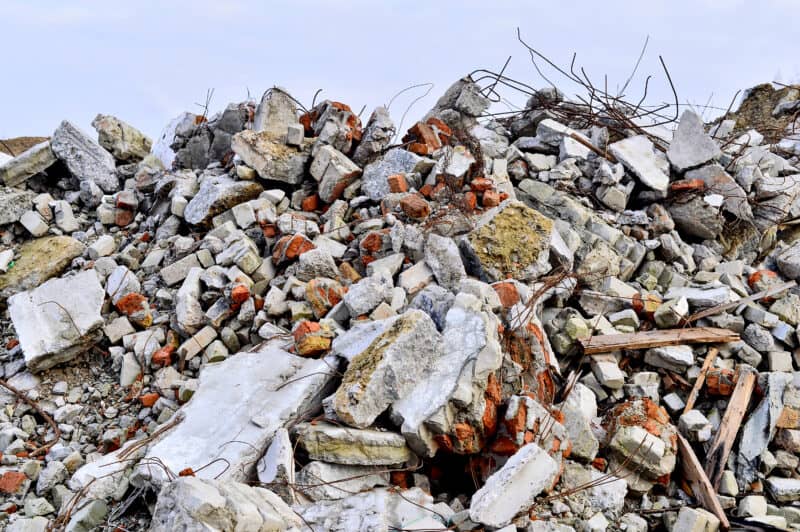
Concrete recycling is one of the most established recovery processes in the industry. Demolished concrete can be crushed and screened to produce graded recycled aggregates.
These materials are widely reused in sub-bases, capping layers and general fill, reducing demand for newly quarried primary aggregates while maintaining practical performance in non-structural applications.
2. Brick and Masonry
Bricks and masonry waste from demolition can be processed in a similar way to concrete. Once crushed and screened, they are suitable for use in bulk fill and groundwork projects.
Clean separation on site improves recovery rates and ensures material can be processed efficiently.
3. Asphalt
Planings from roadworks and resurfacing projects are routinely recovered. Asphalt can be reprocessed and incorporated into new road construction, supporting material efficiency across infrastructure works.
4. Metals (Steel, Aluminium, Copper)
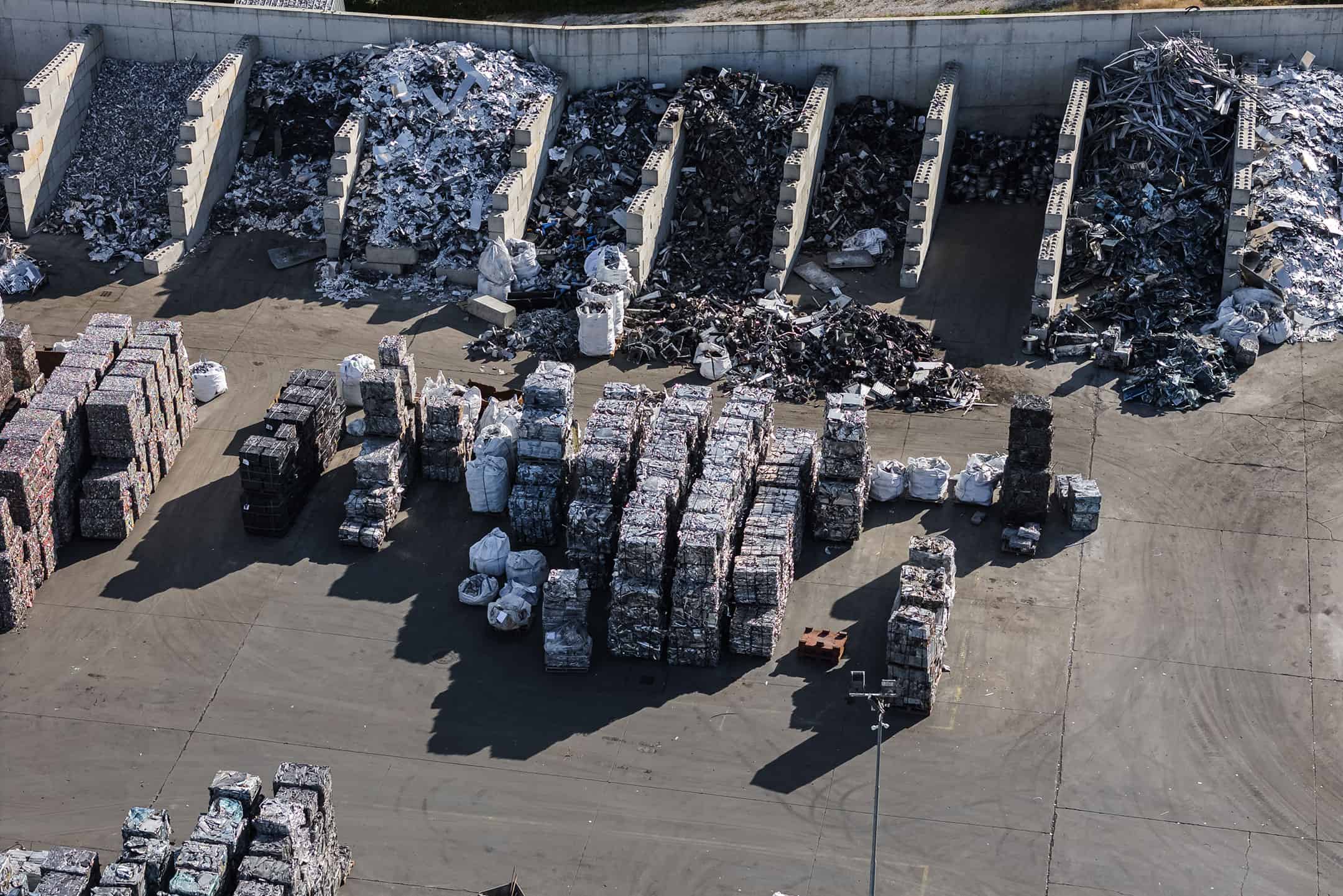
Metals are among the most recyclable materials in construction. Steel beams, reinforcement bars, copper wiring and aluminium components can be separated and directed into established metal recycling streams.
Metal recycling in construction is supported by the material’s ability to be reprocessed repeatedly without significant loss of quality, provided it is handled through authorised channels.
5. Timber
Untreated timber from site hoardings, temporary works or demolition can often be recycled. Depending on its condition, timber may be reused, processed into engineered products or directed into biomass recovery.
Segregation prevents contamination from treated or hazardous timber.
6. Plasterboard
Plasterboard requires careful separation due to its gypsum content. When handled correctly, it can be recycled into new plasterboard products or other gypsum-based materials.
Clear site procedures reduce the risk of cross-contamination with general waste.
7. Soil and Hardcore
Excavated soil and hardcore can frequently be screened and graded for reuse, either on the original site or elsewhere.
Through controlled land recovery and processing, suitable material can be diverted from landfill and repurposed for landscaping, embankments or general groundwork.
8. Glass
Glass from commercial fit-outs or demolition projects can be recycled where separated effectively. Although not as common as concrete or metal recycling, established processing routes exist for clean glass streams.
9. Plastics
Construction sites generate plastic waste from packaging, pipework and protective materials. When segregated properly, many plastics can be recycled through specialist facilities.
Segregation at source significantly improves the likelihood of recovery.
10. Insulation Materials
Recycling routes for insulation are developing as the industry evolves. Some insulation products can be recovered and reprocessed when removed carefully and kept separate from contaminated materials.
As technologies improve, recovery options are continuing to expand.
How Recycled Materials Are Processed
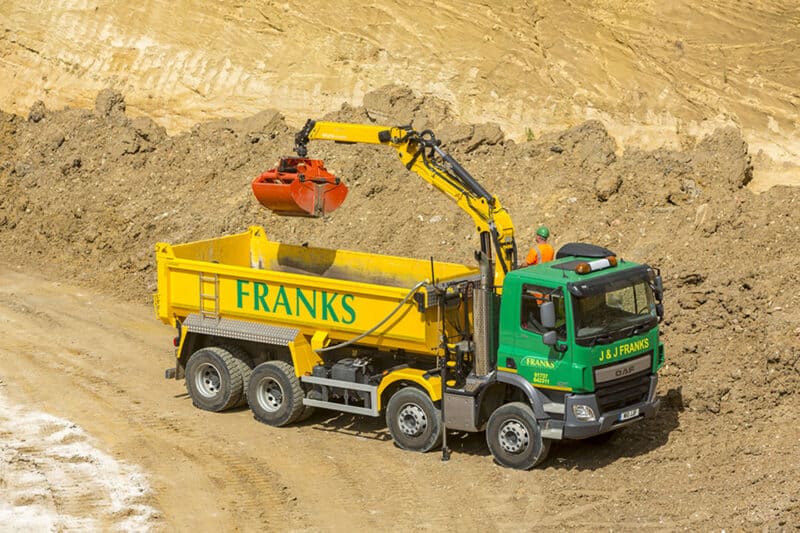
The recycling process typically begins with collection from site by a licensed waste carrier. Materials are transported to an authorised waste transfer facility where they are inspected, sorted and directed into appropriate recovery streams.
Processing may involve:
- Mechanical separation
- Crushing and screening
- Grading into consistent sizes
- Quality checks before redistribution
Responsible handling and traceability are central to this process. Our approach to trade waste recycling supports contractors in managing mixed construction waste streams while maintaining compliance.
For projects in the region, understanding local regulations and facility capabilities is important. You can find further guidance in our article on what to know about construction waste recycling in Surrey.
The Practical Benefits of Using Recycled Materials
Using recycled materials in construction offers clear operational benefits.
Recovered aggregates reduce reliance on primary extraction for suitable applications. Metal recycling preserves valuable resources. Reusing soil and hardcore minimises unnecessary waste movements.
From a project management perspective, construction waste recycling supports:
- Improved material efficiency
- Reduced landfill dependency
- Better documentation and traceability
- Compliance with waste duty of care
Recycled materials are not a replacement for every primary product. Their suitability depends on specification and engineering requirements. Used appropriately, however, they form a dependable part of modern construction.
Recycling as a Practical Part of Modern Construction
Recycling is now a structured and routine part of construction activity. Concrete, metals, timber and other materials all have established recovery routes when managed correctly and processed through authorised facilities.
With over 80 years of experience, J&J Franks supports contractors and developers across Surrey, West Sussex and South London with licensed waste handling, waste transfer operations and responsible waste management focused on landfill diversion and traceability.
If you need support with construction waste recycling or material recovery planning, contact us to discuss your project requirements.