Waste transfer notes help businesses manage their waste legally and responsibly. For companies across Surrey, having the correct waste documentation in place is a legal requirement that protects from fines, disputes and reputational damage. With fly tipping continuing to affect areas such as Merstham, Coulsdon, Reigate and Leatherhead, ensuring waste is properly tracked and transferred has never been more important. When waste is not documented correctly, it becomes much harder to prove it has been disposed of legally, increasing the risk of business liability.
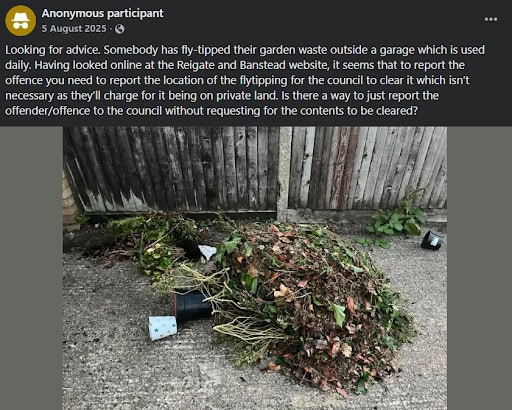
Fly tipping is a Surrey-wide issue, frequently discussed in local Facebook groups and community forums. A Merstham resident recently reported that someone had fly tipped garden waste outside a garage used daily. Because the waste was left on private land, there was concern the resident could be held responsible for removal costs. Situations like this highlight why proper waste management and accurate waste transfer notes are essential for businesses. Without clear documentation, it can be difficult to prove where waste came from and who is responsible.
What Is a Waste Transfer Note?
A Waste Transfer Note, often called a WTN, is a legal document required under the Environmental Protection Act 1990. It records the transfer of non hazardous waste from one party to another. The law places a duty of care on anyone who produces, carries, keeps, treats or disposes of controlled waste. Waste transfer notes act as proof that your waste has been handled correctly and passed to an authorised person, which is particularly important in areas like Reigate and Leatherhead where compliance is closely monitored.
You need a Waste Transfer Note for most types of non hazardous business waste, including:
- Office waste such as paper and packaging
- Construction waste such as soil, bricks and rubble
- Commercial waste from shops, restaurants and warehouses
Hazardous waste follows a different process and requires a consignment note instead. This falls under separate Environment Agency waste rules and involves stricter controls due to the risks associated with hazardous materials.
Your Legal Duty of Care
If your business produces waste, you are responsible for it from the moment it is created until it is properly disposed of. This is known as cradle to grave responsibility and forms the foundation of UK waste management law.
Under this law, you must:
- Store waste securely
- Prevent escape or contamination
- Transfer waste only to authorised carriers
- Keep accurate records
Fly tipping liability can still fall on your business if waste is traced back to you, even if you did not dispose of it yourself. This is a key aspect of waste documentation and duty of care. Across Surrey, enforcement teams regularly investigate illegal waste disposal, where missing paperwork can result in penalties. Simply put, ignorance is not a defence.
Checking a Waste Carrier Licence
Before handing over waste, you must check that the carrier is properly registered. In England, this means verifying their details with the Environment Agency.
Failing to carry out this basic check can result in fines or prosecution. Many businesses assume their contractor is compliant, particularly on busy sites in areas like Coulsdon or Merstham. However, if that contractor fly tips your waste and it is traced back to you, the consequences can be significant.
What Information Must a Waste Transfer Note Include
A valid Waste Transfer Note must include:
- A description of the waste
- The relevant waste code from the European Waste Catalogue
- Quantity and how it is contained
- Details of both parties
- Date and place of transfer
- Confirmation that the waste hierarchy has been considered
Vague descriptions such as “general waste” are not acceptable. The information must be detailed enough for someone else to identify the waste and ensure it is handled in line with WTN requirements.
Waste transfer notes must be retained for at least two years. Electronic records are acceptable as long as they are stored securely and can be accessed when required. Keeping organised records is essential if your business is ever subject to inspection or investigation.
Waste Transfer Notes in Construction and Property
Construction and property sectors across Surrey, including Dorking and Redhill, generate large volumes of waste and are subject to increased scrutiny. Whether using skip hire in Redhill or arranging grab hire in Dorking, proper waste documentation is still required to ensure compliance with waste management regulations.
Site Waste and Excavated Materials
Construction and demolition projects produce significant amounts of controlled waste. Each load removed from site must be documented with a Waste Transfer Note. Developers, contractors and waste carriers all share responsibility for ensuring this process is followed correctly. On busy sites, poor documentation can quickly lead to delays, enforcement action or reputational damage.
Landlords and Managing Agents
Landlords and managing agents also have responsibilities when arranging waste removal. Property managers must ensure all waste contracts and documentation meet legal standards. In mixed-use developments, responsibilities should be clearly defined to avoid gaps that could lead to compliance failures or fly tipping risks.
Common Mistakes That Lead to Fines
Many waste management risks arise from simple administrative mistakes rather than deliberate wrongdoing. However, these errors can still lead to enforcement action if they breach waste documentation requirements.
Poor Waste Descriptions
Using unclear or incomplete descriptions is one of the most common issues with waste transfer notes. This reduces traceability and increases the likelihood of waste being mishandled or disposed of incorrectly.
Not Retaining Documentation
Failing to keep waste transfer notes for the required period is another common mistake. During inspections, missing paperwork can result in fines even if the waste was handled correctly.
Using Unregistered Carriers
Handing waste to an unregistered carrier exposes your business to serious risk. If the waste is fly tipped, enforcement teams may trace it back to you and treat it as a breach of duty of care.
Enforcement and Penalties
The Environment Agency and local authorities have powers to:
- Issue fixed penalties
- Serve compliance notices
- Prosecute serious breaches
Fines can reach thousands of pounds, and in more serious cases, company directors may face criminal liability. Fly tipping investigations often rely heavily on paperwork, making waste transfer notes a critical safeguard for businesses. Without proper documentation, defending your position becomes significantly more difficult.
Staying Compliant and Protecting Your Business
Compliance with waste regulations is not optional. Waste transfer notes provide clear, documented evidence that your business has fulfilled its legal duty of care and handled waste responsibly. They are a key part of protecting your operations against legal and financial risks.
By maintaining accurate waste documentation, working with authorised carriers and keeping organised records, you reduce the likelihood of fines, disputes and reputational damage. In areas across Surrey where fly tipping remains a visible and ongoing issue, these steps are essential for responsible and compliant waste management.
Contact J&J Franks for responsible, fully licensed waste management services with compliant waste transfer notes provided for every job.