Introduction to Skip Hire Sizing
Choosing the correct skip size ensures efficient waste disposal and cost control. Select a skip that’s too small, and you may need to order a second one. Choose one too large, and you’ll pay for space you don’t need. Finding the right balance saves time, money and avoids the hassle of delays, permit extensions or overfill penalties. Whether you’re tackling a DIY project or managing construction waste, accurate sizing is key to successful skip hire.
How the Skip Size Calculator Works
Our skip size calculator simplifies the process of choosing the ideal skip. You’ll be guided through a few easy steps:
- Select the type of waste you’re dealing with: general household, garden waste, heavy materials or mixed waste.
- Estimate the volume of waste you expect to generate.
- The calculator then recommends the most suitable skip size based on your inputs, helping you avoid guesswork and get the best value for your skip hire.
Typical Skip Sizes Explained
Mini Skips (2–3 Yard)
Mini skips are best suited for small domestic tasks such as garden clearances, loft decluttering or light DIY projects. Compact and easy to place, they’re ideal for tight spaces and smaller waste loads.
Midi Skips (4–5 Yard)
Perfect for moderate-sized jobs like kitchen or bathroom refurbishments, midi skips offer more capacity without taking up too much space. They comfortably handle bulky household items and moderate renovation waste.
Builders Skips (6–8 Yard)
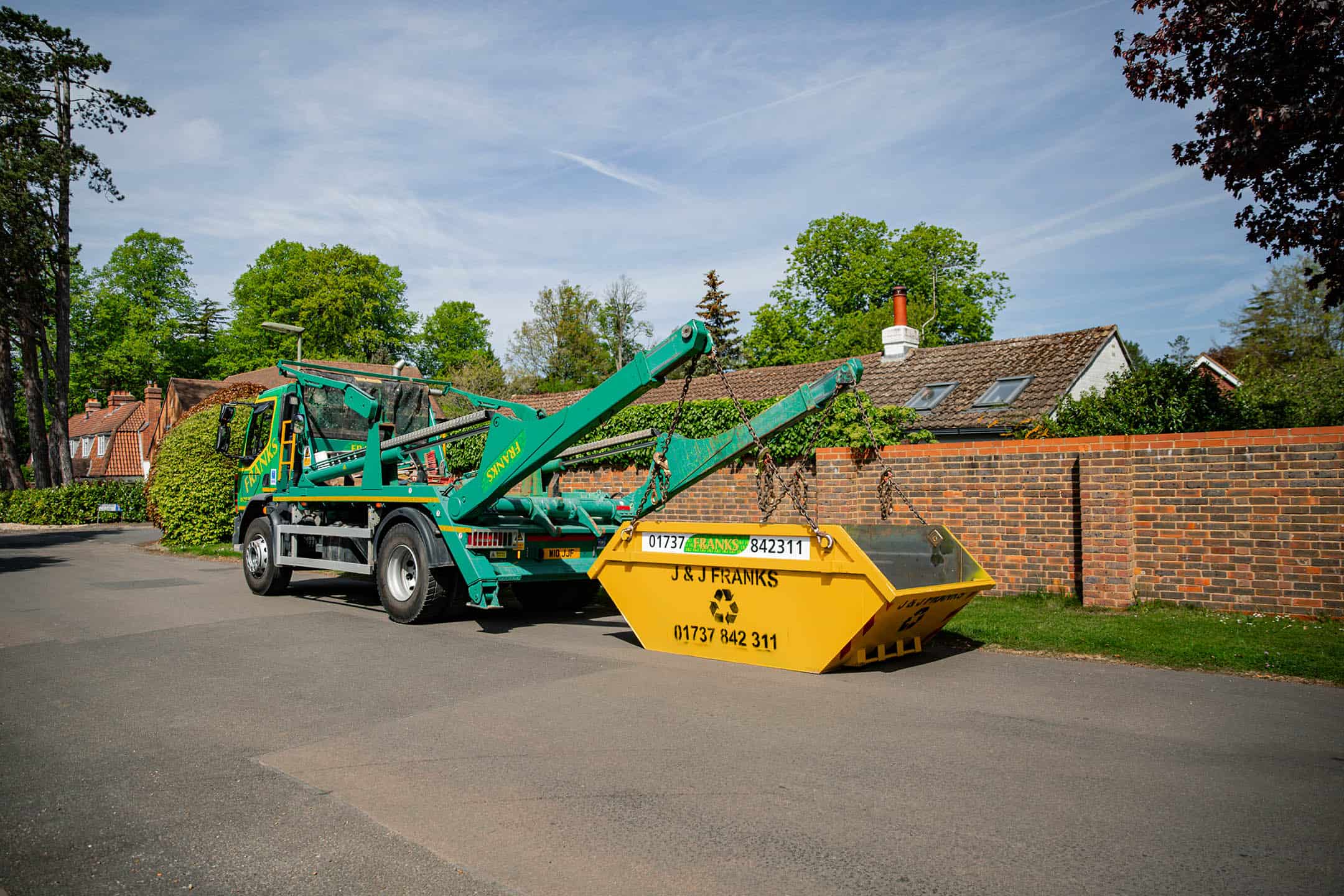
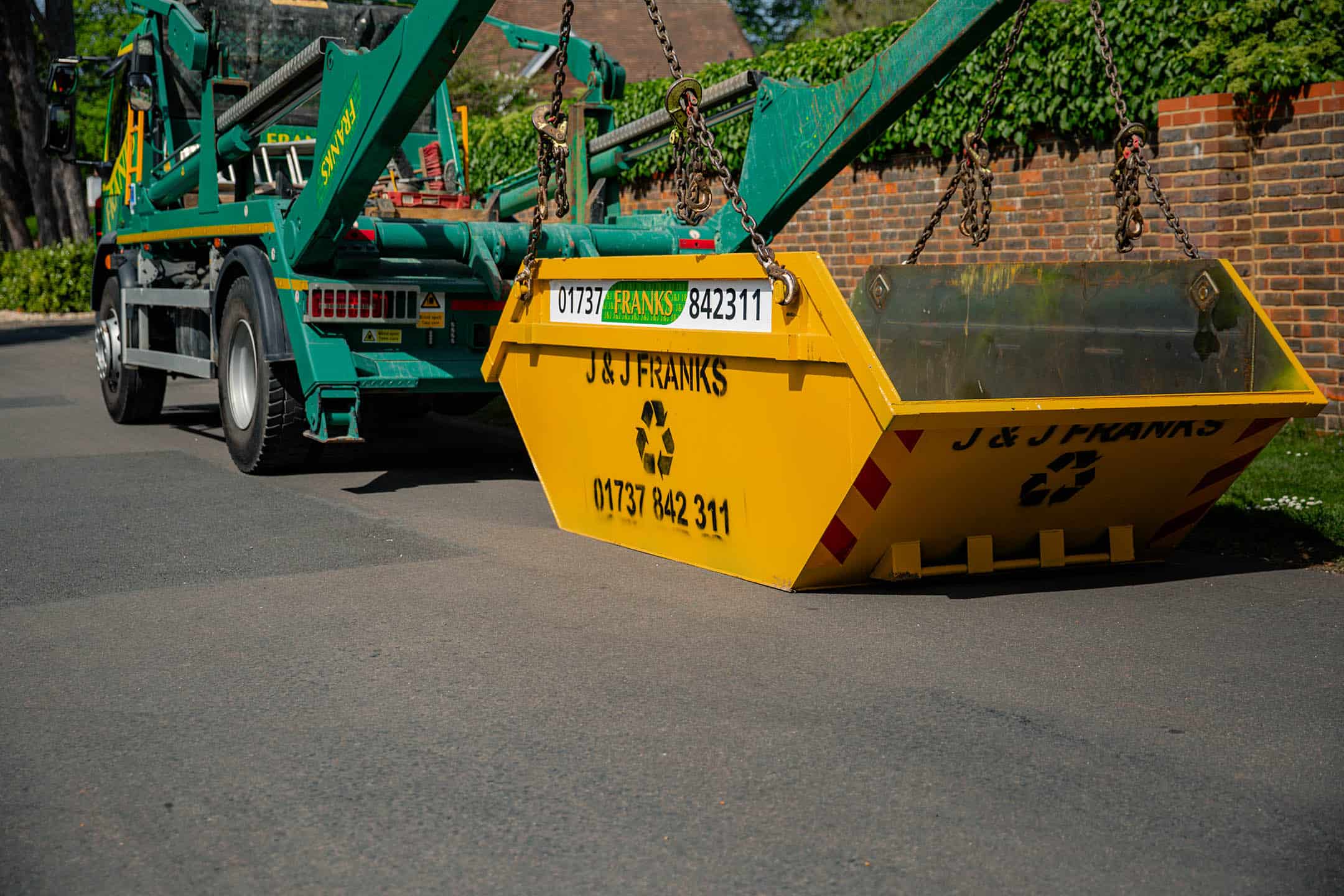
Commonly used in construction and renovation, builders skips are designed for heavy waste such as rubble, bricks and soil. They’re also ideal for larger household clear-outs and are one of the most popular choices in the UK.
Large Skips (10–16 Yard)
Large skips are used for bulky or lightweight waste, including furniture, packaging or commercial site clean-ups. They’re unsuitable for heavy materials like soil due to weight limits but still offer generous capacity.
Roll-on Roll-off Skips (20–40 Yard)
Designed for industrial or demolition waste, roll-on roll-off skips are ideal for large-scale projects. These are suited to sites generating a continuous stream of waste and require ample space for placement and loading.
Factors That Affect Skip Size Choice
Type of waste: Certain skips are better for specific materials. For example, heavy waste like soil or concrete should go in smaller skips, while larger skips are better for light, bulky items.
Volume and weight limitations: Each skip has a maximum fill level and weight capacity. Overloading can result in penalties or collection refusals.
Space available for placement: Consider driveways, access roads and placement. Larger skips require more space and often a council permit if placed on public land.
Local council regulations: Some councils restrict skip size or location. Always check permit requirements before booking.
Tips for Accurate Waste Estimation
To visualise cubic yardage, think of one cubic yard as roughly the size of two standard washing machines side by side. Estimating how many of these ‘blocks’ your waste would fill can help you gauge the correct skip size.
Using bin bags or wheelbarrows is another useful method. For example, a 6-yard skip holds around 60 full bin bags. Counting these helps avoid under or overestimating.
Common mistakes include forgetting about bulky items, underestimating rubble weight or assuming the skip can be filled above the top level – which it can’t. Plan carefully to avoid extra charges or the need for additional skips.
Cost Implications of Over or Under-Sizing
Overfilling a skip can lead to additional charges or even refusal to collect the skip. Councils may also fine you if waste spills onto public land.
Underestimating your waste often results in needing a second skip, doubling costs and causing project delays.
Getting the size right the first time ensures a smooth, cost-effective experience. It also avoids permit reapplications, rescheduling and unnecessary hassle.
Environmental and Legal Considerations
Skips must not contain restricted items such as asbestos, paint, electrical goods or hazardous chemicals. Your skip hire provider will supply a full list of what can and can’t go in.
Choosing the right size contributes to efficient recycling and waste separation. At J&J Franks, we sort and recycle waste at licensed centres, supporting local sustainability goals.
By law, all waste producers have a duty of care. Using a licensed skip hire company ensures legal compliance and responsible disposal, protecting both you and the environment.
When to Use a Skip Size Calculator
If you’re planning a home renovation, extension or interior refit, our skip size calculator helps ensure you choose the right size from the start.
For garden makeovers, hedge cutting or shed clear-outs, using a calculator can help determine if a mini or midi skip is more appropriate.
On construction sites, skip sizing calculators take into account rubble, timber and mixed building waste, making project planning more efficient and compliant.
Find the Right Skip Size with Confidence
Choosing the correct skip size can save money, reduce environmental impact and keep your project running on schedule. Whether you’re planning a domestic clearance or managing a commercial build, using our skip size calculator ensures you hire a skip that fits the task.
Use our Skip Size Calculator today to find your ideal skip size quickly and accurately. For further advice or a custom quote, contact the J&J Franks team. We’re here to help make your skip hire simple and stress-free.