The Real Question: What Are You Trying to Solve?
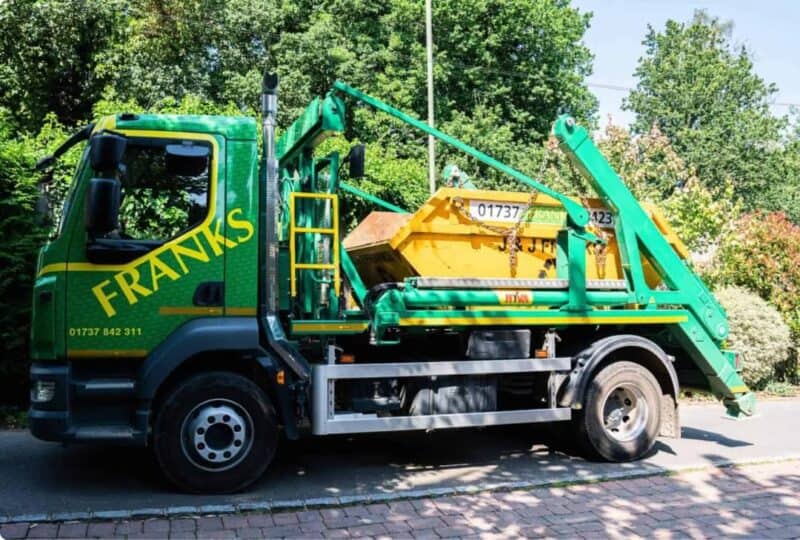
When choosing between grab hire and skip hire, the first question shouldn’t be which is better, but what problem are you trying to solve? Each option has its strengths. Skip hire is ideal for predictable, longer-term waste needs where gradual loading is expected. Grab hire, on the other hand, is designed for rapid waste removal, particularly when dealing with large volumes or limited site access. The right choice depends entirely on your situation.
Space, Access and Practical Constraints
Residential or Tight Spaces
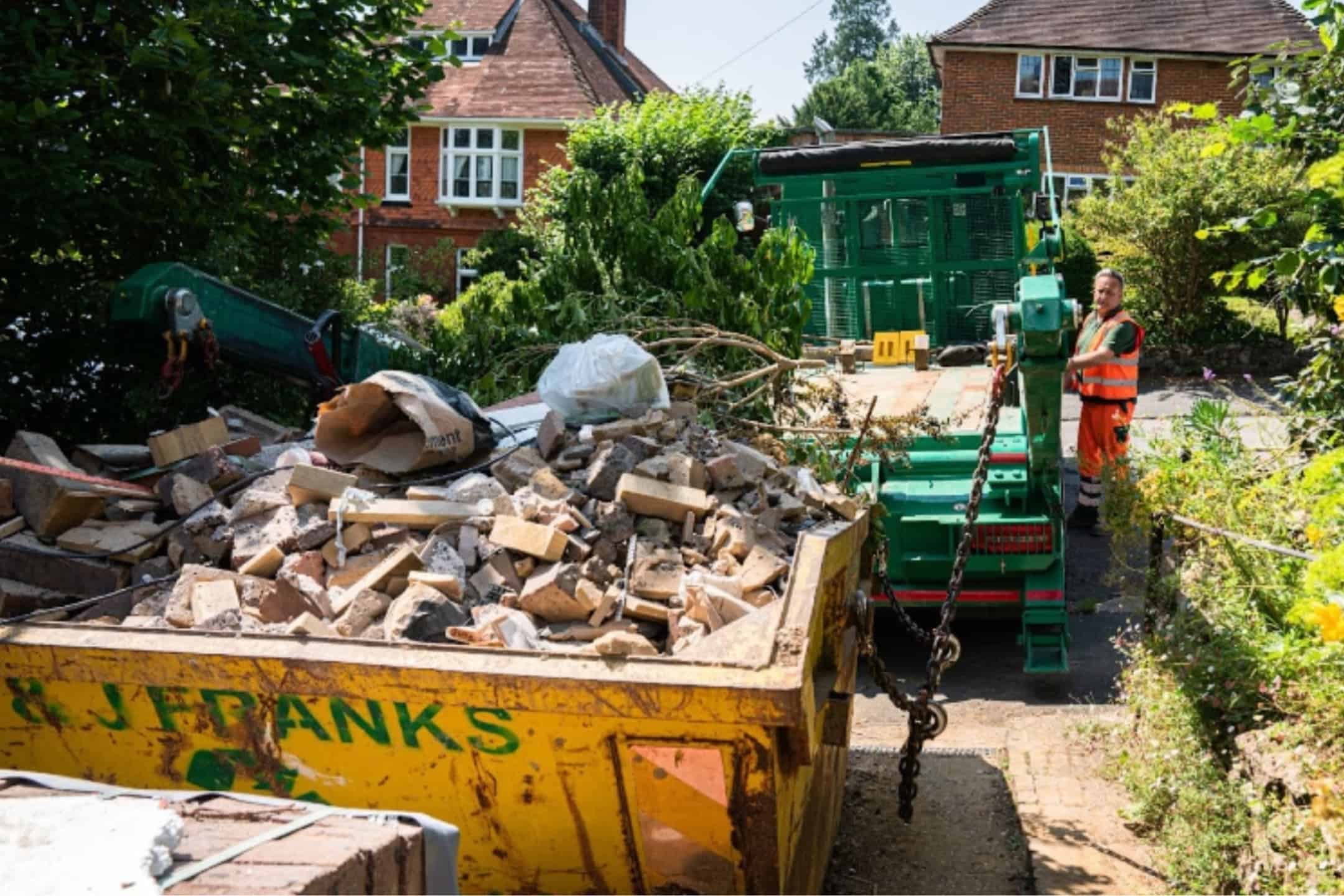
In urban or residential areas, space is often the deciding factor. Grab lorries require sufficient road space to park safely and extend their hydraulic arm. They collect waste from a distance, but can’t operate where overhead obstructions or narrow roads restrict access. Skips, by contrast, need dedicated ground space, typically on a driveway or private land. If no such space exists, you’ll likely need a council permit to place a skip on a public road, which adds both time and cost.
Over Fences or Behind Walls
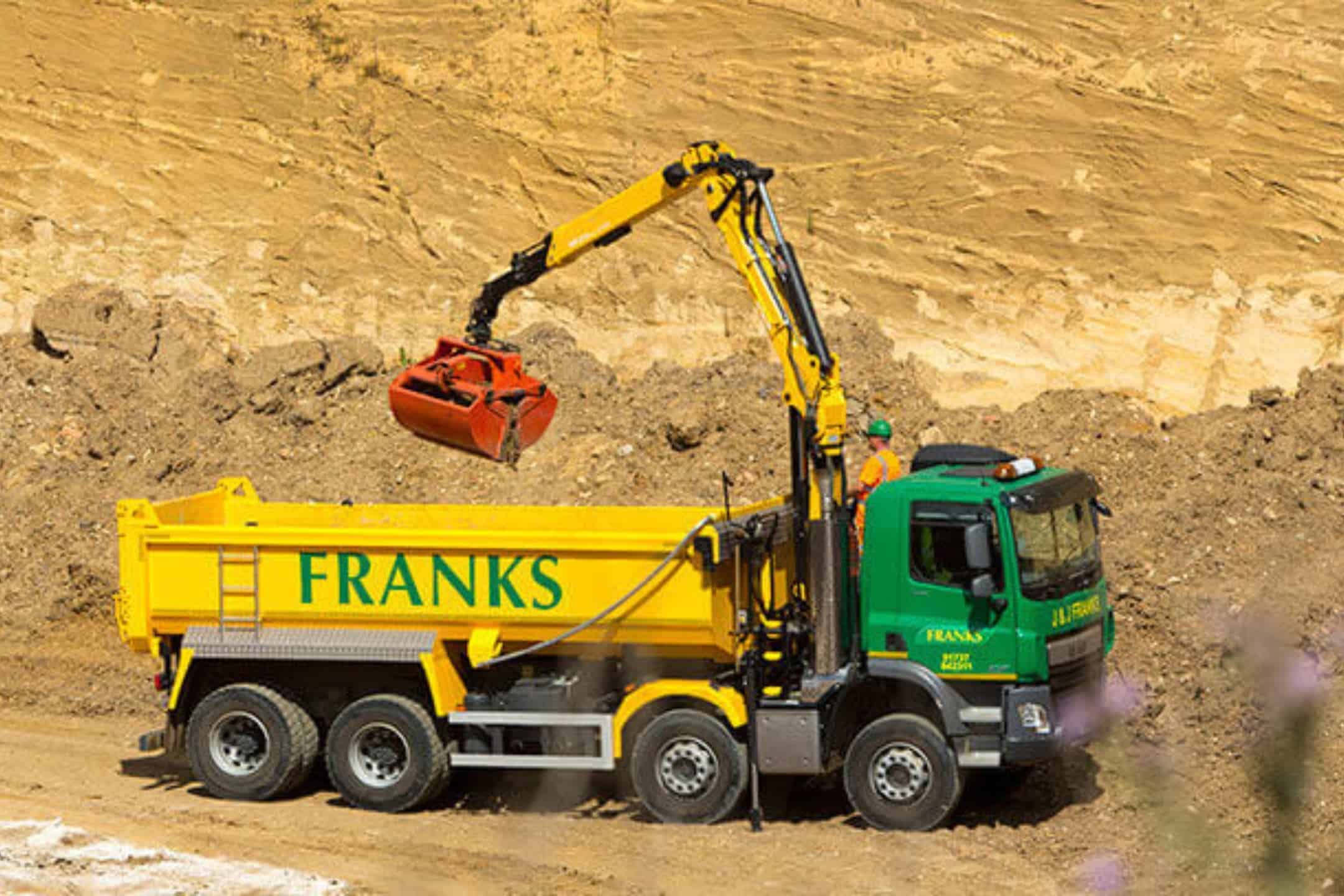
Grab hire is particularly useful when waste isn’t easily accessible. The hydraulic arm can reach over fences, walls or other obstacles to collect materials from behind garden boundaries or from rear sections of a property. Skips, however, must be physically loaded by hand or machine and placed on a level surface that’s easy to access. In situations with difficult terrain or restricted access, grab hire often proves far more practical.
Speed of Collection and Turnaround Time
One-and-Done vs Ongoing Use
Grab hire is a fast, one-visit solution. The lorry arrives, loads your waste using the grab arm, and takes it away in a single trip. This is ideal when you want waste gone immediately without needing to store it on site. Skip hire, in contrast, gives you time to load gradually. You might keep a skip for several days or weeks, filling it as your project progresses. This flexibility suits renovations or clean-ups where waste is generated over time.
Job Duration and Scheduling
If your project timeline is short, grab hire is often more efficient. It removes large amounts of waste quickly, with minimal disruption. Skips are better suited to projects with staggered stages or ongoing activity. Because skips stay on-site, they act as a central point for accumulating waste over longer durations. Scheduling collection and replacements can be planned in line with your project’s phases.
Waste Volume and Type – Does It Matter?
Heavy Waste Like Soil or Rubble
Grab hire shines when dealing with dense, heavy waste. Materials like soil, hardcore and broken concrete can be difficult and labour-intensive to load into skips. Grab lorries do the lifting for you, reducing both effort and risk. In many cases, grab hire works out more cost-effective because it consolidates labour, transport and removal into a single, efficient process.
General Household or Mixed Waste
For lighter, mixed waste, such as what you might produce from a loft clear-out or garage tidy, skip hire is often the simpler choice. Skips can take a variety of non-hazardous household materials and allow you to load at your own pace. For these less time-sensitive and varied loads, skip hire delivers a combination of flexibility and convenience.
Cost Considerations – It’s Not Just About the Sticker Price
It’s easy to compare the basic hire price of a skip or grab lorry, but the full cost story goes deeper. Skips may require a permit if placed on a public road and you could face additional charges for overfilling or exceeding weight limits. The longer you keep the skip, the higher the cost. Grab hire may look more expensive up front, but the labour is included. The operator loads the waste for you, saving time and effort, especially on sites where manpower is limited.
Environmental Responsibility – Who Sorts Your Waste?
Environmental impact is a key consideration for many customers. With grab hire, providers often sort and recycle waste as part of the service. Waste is taken directly to licensed facilities where it’s separated and processed, reducing landfill use. Skip users may need to separate materials themselves, especially if working with different waste streams. This adds complexity and requires knowledge of what can and cannot be mixed. Always check what your provider does with collected waste and ensure they are fully licensed.
The Verdict: It’s About Fit, Not Better or Worse
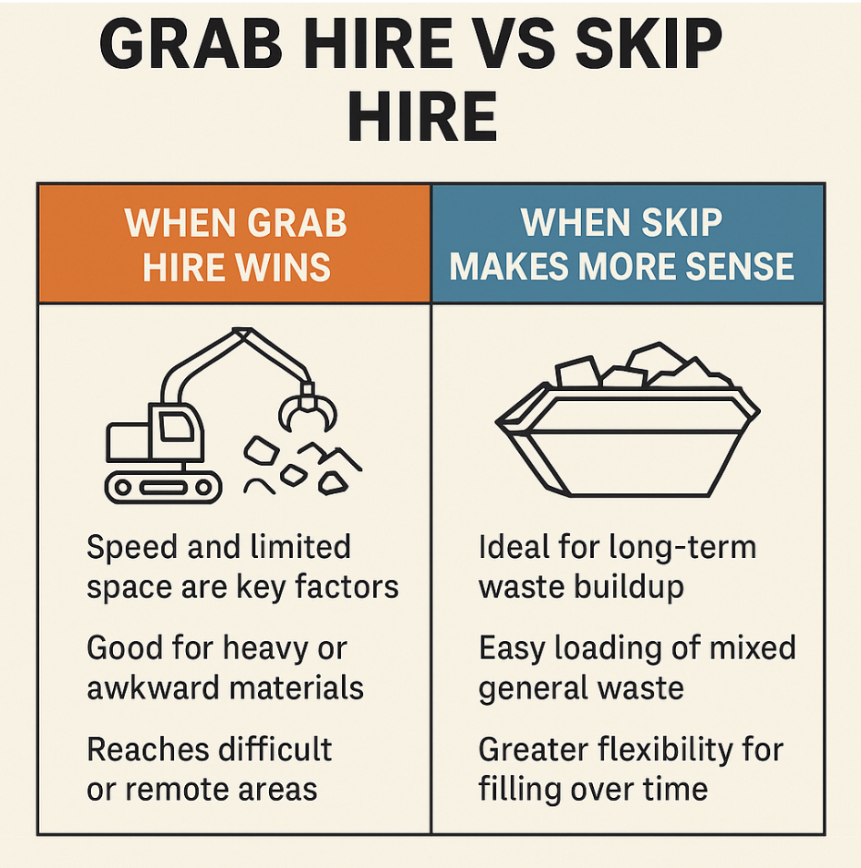
Ultimately, grab hire and skip hire serve different needs. The right choice depends on your site conditions, the volume and type of waste and how quickly you need it cleared. There is no universal “better”, only what’s right for your specific project. If you have bulk waste and limited access, grab hire is likely the smarter move. For phased or varied clear-outs, skip hire is a dependable option.
Whatever your requirements, J&J Franks can help you choose the right waste solution. Get in touch to arrange grab hire or skip hire that fits your project, your schedule and your site.